This sustainable mobility solution is particularly useful in urban areas, where traffic and the cost of maintaining a car can be a problem.
In the map below you can find the vehicles closest to you:
[Insert map here]
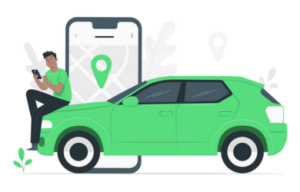 Types of Car Sharing
There are several modes of car sharing, each with specific features to adapt to the needs of users:
- Station-based – Vehicles must be picked up and returned to designated pick-up points. This system is ideal for those who need to plan their movements in advance.
- Free-floating (without fixed stations) – Cars can be rented and parked freely within a defined area, providing greater flexibility and convenience.
- Peer-to-peer (P2P) – In this model, private owners make their vehicles available for hire, creating a network of sharing between users.
- Corporate car sharing – Companies provide shared cars for their employees, reducing company fleet management costs and promoting more sustainable business travel solutions.
Car Sharing and Smart Cities
In smart cities, car sharing is integrated with other sustainable modes of transport, such as public transport, bike sharing and electric scooters. Thanks to digitalisation and mobile apps, users can book, unlock and pay for a car in seconds, making the service even more accessible and efficient. In addition, the use of electric car fleets in car sharing contributes to reducing emissions and improving air quality.
Benefits of car sharing
Car sharing offers many benefits for both the environment and users:
- Reduction in the number of cars in circulation – Each shared vehicle can replace up to 10-15 private cars, reducing traffic congestion.
- Lower CO2 emissions – The shared use of vehicles and the increasing spread of electric fleets contribute to the reduction of air pollution.
- Economic savings – The costs of maintenance, fuel, insurance and parking are eliminated or reduced compared to owning a private car.
- Increased efficiency in travel – Car sharing makes it possible to have a car only when it is needed, avoiding unnecessary waste of resources.
- Integration with other means of transport – The service is often used in combination with shared trains, buses and bikes, favouring multimodal mobility.
- Optimisation of urban spaces – With fewer private cars in circulation, there is free space for pedestrian areas, cycle paths and public greenery.

 English (US)
 Italiano
 Deutsch